(Clear, professional & legally styled)
Terms of Service
Welcome to Swami Polymers. By accessing and using https://swamipolymers.com, you agree to comply with the following terms.
1. Website Use
You agree to use this website only for lawful business purposes including:
• Product inquiries
• Service information
• Communication with our company
Any misuse, hacking, or harmful activity is prohibited.
2. Content Ownership
All content on this website including:
 Text Images Logos Product descriptions
Is the property of Swami Polymers and may not be copied or reused without permission.
3. Product Information
We strive to keep product information accurate. However:
• Specifications may change without notice
• Images are for reference only
• Final terms are confirmed through direct communication
4. Limitation of Liability
Swami Polymers is not responsible for:
• Website downtime
• Data loss
• Business interruption
• Indirect damages
Use of the website is at your own risk.
5. Third-Party Services
We may link to third-party websites. We are not responsible for their content or services.
6. Modifications
We reserve the right to update these Terms at any time without prior notice.
7. Governing Law
These terms are governed by the laws of India.
 Contact Information
For any questions regarding these terms:
Email: info@swamipolymers.com
Website: https://swamipolymers.com
(For swamipolymers.com — professional & business compliant)
Privacy Policy
At Swami Polymers, we respect your privacy and are committed to protecting the personal information you share with us through our website.
This Privacy Policy explains how we collect, use, and safeguard your information when you visit https://swamipolymers.com.
1. Information We Collect
We may collect the following information:
• Name, phone number, email address
• Company details (if provided)
• Inquiry or contact form submissions
• Website usage data (cookies, IP address, browser type)
2. How We Use Your Information
We use collected data to:
Respond to inquiries and customer requests Improve our website and services Communicate regarding products and orders Maintain business records and security
We do not sell or share personal data with third parties for marketing.
3. Cookies
Our website may use cookies to:
• Improve user experience
• Analyze website traffic
• Understand visitor behavior
You may disable cookies through your browser settings.
4. Data Security
We implement appropriate security measures to protect your personal data from unauthorized access, misuse, or disclosure.
5. Third-Party Links
Our website may contain links to external sites. We are not responsible for the privacy practices of those websites.
6. Your Consent
By using our website, you consent to this Privacy Policy.
7. Updates to Policy
We may update this policy occasionally. Any changes will be posted on this page.
Contact Us
If you have any privacy-related questions:
Email: info@swamipolymers.com
Website: https://swamipolymers.com

PPCP (Polypropylene Copolymer) is a high-performance thermoplastic material widely used in industries that require strength, toughness, and durability. At Swami Polymers, we supply premium-grade PPCP materials to support manufacturing sectors such as automotive, household products, appliance parts, industrial components, and more.
Compared to normal PP (Polypropylene Homopolymer), PPCP offers better impact resistance, improved flexibility, and higher crack resistance, especially in low-temperature environments. This makes it one of the most reliable materials for long-lasting applications.
What Is PPCP (Polypropylene Copolymer)?
PPCP is produced by combining propylene monomers with ethylene monomers, resulting in a stronger and more impact-resistant polymer structure. Due to the added ethylene content, PPCP becomes tougher and more flexible than standard PP.
Key Characteristics of PPCP
- Excellent impact strength (better than PP)
- High chemical resistance
- Good low-temperature performance
- High durability and stress-crack resistance
- Can be easily injection-molded
- Lightweight but strong
- Recyclable material
Because of these properties, PPCP is heavily used in industries requiring rigid yet tough parts.
How PPCP Is Manufactured
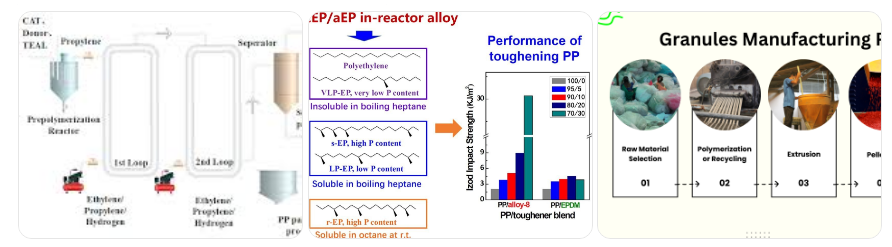
The production of PPCP involves creating a copolymer through controlled polymerization.
1. Raw Material Preparation
- Propylene gas and ethylene gas are purified.
- They are carefully measured, as the ratio affects strength, flexibility, and melting point.
2. Copolymerization Process
During polymerization:
- Propylene and ethylene are combined inside a reactor.
- A catalyst (usually Ziegler–Natta) initiates the reaction.
- Polymer chains form with embedded ethylene units, providing enhanced toughness.
This carefully controlled process creates impact-copolymer PP, known commercially as PPCP.
3. Processing Into Granules
Once polymerization is complete:
- The copolymer is extracted
- Stabilized
- Dried
- Cut into PPCP granules
Manufacturers then use these granules for injection molding or extrusion to create high-strength components.
Types of PPCP
1. Impact Copolymer PPCP
- Highest toughness
- Best for automotive and industrial applications
2. Random Copolymer (RCP) – Related Variant
Although not the same as PPCP, RCP is a softer, clearer copolymer used in packaging and household items.
Applications of PPCP
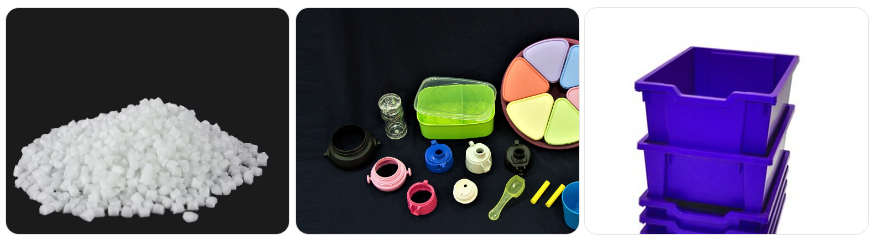
PPCP is used across multiple sectors due to its superior strength and durability. At Swami Polymers, our PPCP materials are chosen for:
Automotive Industry
- Battery cases
- Bumpers
- Air ducts
- Dashboards
- Trims & panels
Industrial Applications
- Storage crates
- Pallets
- Tool housings
- Machine components
- Chemical containers
Household & Consumer Products
- Buckets
- Furniture parts
- Containers
- Home appliance components
Electrical & Electronic
- Junction boxes
- Switch housings
- Cable management parts
Why Industries Prefer PPCP (And Why Swami Polymers Supplies It)
At Swami Polymers, PPCP is one of our most recommended materials because:
It delivers superior toughness compared to standard PP
It withstands heavy loads and impact
It performs well in low-temperature environments
It is cost-effective for mass production
It offers excellent chemical resistance
It supports consistent quality in molded products
We supply PPCP in various grades depending on the customer’s manufacturing needs.
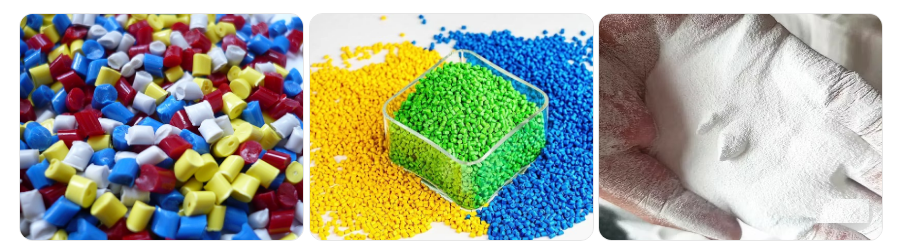
Polyvinyl Chloride (PVC) is one of the most important and versatile synthetic plastic polymers used worldwide. At Swami Polymers, we supply high-quality PVC materials that support industries such as construction, electrical, packaging, and medical manufacturing. Because of its exceptional durability, chemical resistance, and cost-effectiveness, PVC continues to be a top choice for engineers, manufacturers, and product designers.
What Is PVC (Polyvinyl Chloride)?
PVC is a thermoplastic polymer made by polymerizing vinyl chloride monomers (VCM). Due to its adaptable structure, PVC can be formulated to be rigid, semi-rigid, or flexible, making it suitable for hundreds of industrial and commercial applications.
Key Characteristics of PVC
- Excellent chemical resistance
- High durability and long service life
- Flame-retardant (self-extinguishing)
- Good electrical insulation properties
- Cost-effective and easy to process
- Can be rigid (uPVC) or flexible (Soft PVC)
- Weather and abrasion resistance
Because of these properties, PVC is one of the most widely used synthetic materials in the world, especially in construction and piping industries.
How PVC Is Made
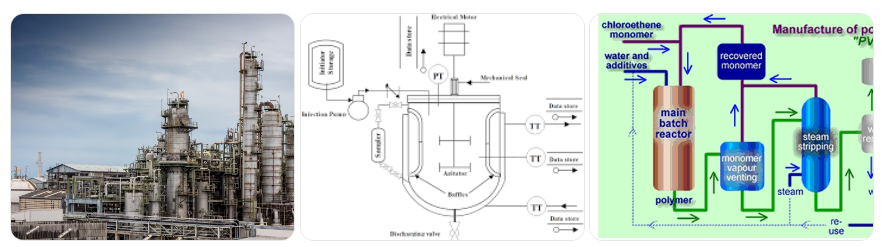
PVC production involves converting vinyl chloride monomers into a solid polymer through controlled polymerization.
1. Raw Material Preparation
PVC starts with ethylene (from crude oil or natural gas) reacting with chlorine to create vinyl chloride monomer (VCM).
Before polymerization, VCM is purified to remove impurities that may affect product quality.
2. Polymerization Process
The most common method is Suspension Polymerization, where:
- VCM is dispersed in water
- Special initiators trigger the polymerization reaction
- Under controlled temperature and pressure, VCM molecules link to form polyvinyl chloride polymer chains
After polymerization:
- The PVC resin is separated from water
- Dried
- Filtered
- Converted into PVC resin powder or granules
This raw PVC resin is the base material used for manufacturing thousands of products.
3. Formulation & Compounding
Pure PVC is rigid by nature.
To create different grades, additives are mixed such as:
- Plasticizers (for flexibility)
- Stabilizers
- Lubricants
- Fillers
- Color pigments
At Swami Polymers, we provide PVC materials tailored to meet specific performance requirements depending on the industry.
Types of PVC
1. Rigid PVC (uPVC)
- Used in pipes, doors, windows, fittings
- Strong and impact-resistant
- Weatherproof and corrosion-resistant
2. Flexible PVC
- Used in cables, hoses, flooring, medical tubes
- Soft, bendable, and lightweight
3. CPVC (Chlorinated PVC)
- Higher heat resistance
- Used for hot water pipes and industrial fluid handling
Applications of PVC Across Industries

PVC’s adaptability makes it one of the most used industrial materials. At Swami Polymers, our PVC materials support industries such as:
Construction & Infrastructure
- Water supply pipes
- Drainage systems
- Window frames
- Doors and profiles
- Roofing sheets
Electrical & Electronics
- Cable insulation
- Conduit pipes
- Connector covers
Packaging
- Shrink films
- Blister packs
- Food-grade wraps
Healthcare & Medical
- IV tubes
- Blood bags
- Medical containers
General Industrial Applications
- Hoses
- Conveyor belts
- Flooring materials
- Synthetic leather
Why PVC Is Preferred by Swami Polymers
At Swami Polymers, we choose PVC because it provides:
- Long lifespan with low maintenance
- Excellent performance in demanding environments
- High recyclability and sustainability potential
- Cost-effective manufacturing options
- Versatility across multiple sectors
Our PVC materials meet industry standards and support both small-scale and large-scale manufacturing needs.
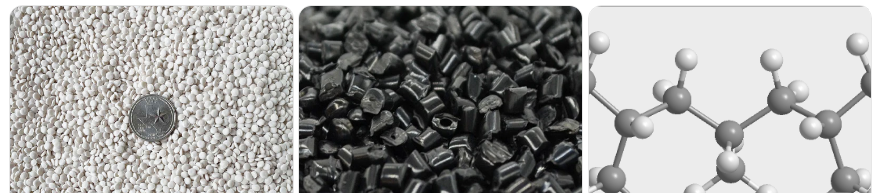
Polypropylene (PP) is one of the most widely used thermoplastic polymers across various industries. At Swami Polymers, we work extensively with PP because it offers an exceptional balance of strength, durability, and cost-effectiveness. In this guide, we explain what PP is, how it’s manufactured, and why it is a preferred choice for countless industrial applications.
What Is Polypropylene (PP)?
Polypropylene is a versatile thermoplastic polymer made from propylene (propene) monomers. Its chemical structure consists of repeating units of CH₂–CH(CH₃), giving it a unique balance of strength and flexibility.
Key Characteristics of Polypropylene
-
- Lightweight yet strong
-
- High chemical resistance to acids, alkalis, and solvents
-
- High melting point (160–170°C) suitable for hot-fill applications
-
- Excellent fatigue resistance (ideal for living hinges)
-
- Customizable — can be rigid or flexible depending on processing
-
- Recyclable (Plastic Code #5)
Because of these advantages, PP continues to be one of the fastest-growing thermoplastics worldwide.
How Polypropylene (PP) Is Made
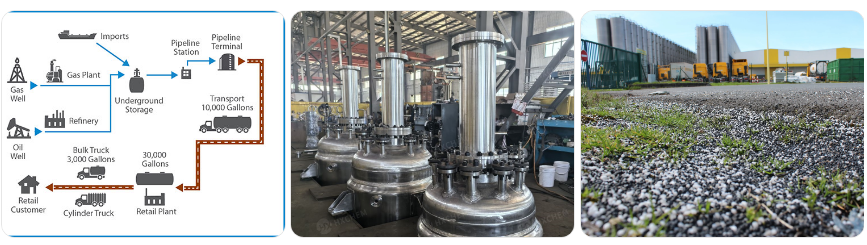
The production of polypropylene involves a detailed polymerization process that transforms propylene gas into solid plastic granules. Let’s break it down step by step.
1. Raw Material Preparation
Propylene gas (C₃H₆) is primarily obtained from:
-
- Crude oil refining
-
- Natural gas processing
Before polymerization, the gas is thoroughly purified to remove contaminants that could interfere with catalyst performance.
2. Polymerization Process (Ziegler–Natta Method)
The most common manufacturing technique is Ziegler–Natta catalytic polymerization, which delivers high-quality PP with consistent molecular structure.
During this process:
-
- Propylene monomers enter a controlled reactor.
-
- A titanium-based Ziegler–Natta catalyst is introduced.
-
- Under moderate temperature (60–80°C) and pressure, the catalyst enables monomers to form long polymer chains.
-
- As a result, the polypropylene polymer begins to form.
This method is widely used because it allows precise control over:
-
- Molecular weight
-
- Degree of crystallinity
-
- Isotacticity (which affects strength and clarity)
3. Processing into Pellets
Once polymerization is complete:
-
- The polymer is separated from the catalyst
-
- It is washed, dried, and cut into plastic pellets
-
- These pellets become the raw material for manufacturing PP products through:
-
- Injection molding
-
- Extrusion
-
- Blow molding
-
- Thermoforming
-
- These pellets become the raw material for manufacturing PP products through:
Types of Polypropylene
1. Homopolymer PP
-
- Strong
-
- High melting point
-
- Commonly used in packaging, textiles, and rigid applications
2. Copolymer PP (Random & Block)
-
- Improved impact strength
-
- Better performance at low temperatures
-
- Used in automotive components, pipes, and medical products
Common Applications of Polypropylene
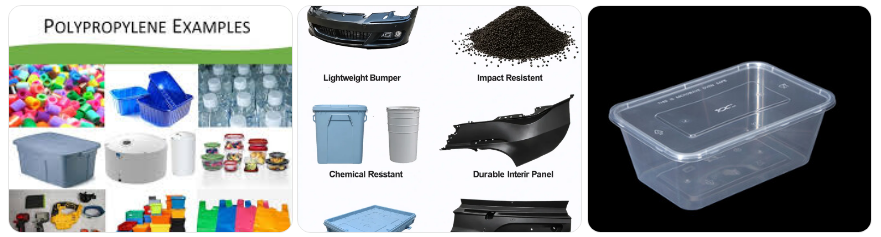
Polypropylene’s balance of performance and affordability makes it suitable for a wide variety of applications. At Swami Polymers, we supply PP for industries such as:
Packaging Industry
-
- Food containers
-
- Bottle caps
-
- Film & sheets
-
- Household storage products
Automotive Sector
-
- Battery cases
-
- Interior components
-
- Bumpers & trims
Textile & Fiber Industry
-
- Non-woven fabrics
-
- Carpets and rugs
-
- Geotextiles
Medical & Laboratory Products
-
- Syringes
-
- Medical trays
-
- Labware
Industrial Uses
-
- Pipes
-
- Chemical tanks
-
- Electrical components
Why PP Is a Preferred Choice at Swami Polymers
At Swami Polymers, we choose polypropylene for manufacturing and supply because:
-
- It offers excellent durability and resists environmental stress.
-
- It maintains shape and strength at higher temperatures.
-
- It provides cost savings compared to many engineering plastics.
-
- It ensures long-term reliability in diverse applications.